The ideas
behind the method
These are the core ideas in the book.
Together, they explain why readers connect with
The Tidy House Method—and why its approach
stands apart from traditional organizing advice.
Mental Load Matters
A cluttered home isn’t just about what you see. Every unfinished task, misplaced item, and overflowing drawer quietly competes for your attention.
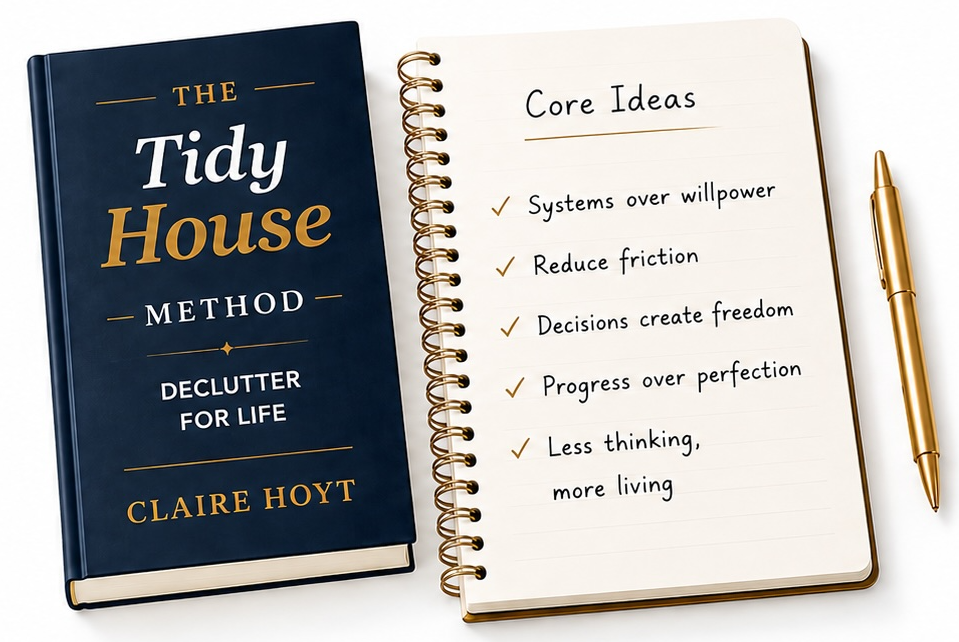
Systems Beat Willpower
Most people don’t struggle because they’re lazy or unmotivated. They struggle because they’re relying on effort instead of systems that make everyday life easier.
Reduce Friction
Small obstacles add up to hundreds of tiny decisions every day. Removing that friction makes routines feel easier without requiring more discipline.
Decisions Create Freedom
The hardest part of decluttering usually isn’t the cleaning—it’s the deciding. Once you’ve made a confident decision, you can stop second-guessing it.
Homes Should Support Real Life
Your home should work for your family as it is today—not for an imaginary version of life with unlimited time and energy.
Progress Over Perfection
You don’t have to transform your entire home in a weekend. Lasting change comes from steady progress, one decision at a time.
Less Thinking, More Living
Good organization isn’t about creating more rules. It’s about making everyday life require fewer decisions.
Lasting Change Starts with Mindset
Organizing once doesn’t solve clutter long-term. Sustainable change begins by changing how you think about your home, your belongings, and the decisions you make.
Practical, Not Pinterest
This isn’t about creating picture-perfect spaces. It’s about building a home that’s easier to maintain, easier to live in, and easier to enjoy.
The Goal Isn’t Owning Less
The goal is creating a home that requires less effort to manage, giving you more time, more energy, and more margin for the people and things that matter most.
The ideas behind the method
These are the core ideas in the book.
Together, they explain why readers connect with
The Tidy House Method—and why its approach
stands apart from traditional organizing advice.
Mental Load Matters
A cluttered home isn’t just about what you see. Every unfinished task, misplaced item, and overflowing drawer quietly competes for your attention.
Systems Beat Willpower
Most people don’t struggle because they’re lazy or unmotivated. They struggle because they’re relying on effort instead of systems that make everyday life easier.
Reduce Friction
Small obstacles add up to hundreds of tiny decisions every day. Removing that friction makes routines feel easier without requiring more discipline.
Decisions Create Freedom
The hardest part of decluttering usually isn’t the cleaning—it’s the deciding. Once you’ve made a confident decision, you can stop second-guessing it.
Homes Should Support Real Life
Your home should work for your family as it is today—not for an imaginary version of life with unlimited time and energy.
Progress Over Perfection
You don’t have to transform your entire home in a weekend. Lasting change comes from steady progress, one decision at a time.
Less Thinking, More Living
Good organization isn’t about creating more rules. It’s about making everyday life require fewer decisions.
Lasting Change Starts with Mindset
Organizing once doesn’t solve clutter long-term. Sustainable change begins by changing how you think about your home, your belongings, and the decisions you make.
Practical, Not Pinterest
This isn’t about creating picture-perfect spaces. It’s about building a home that’s easier to maintain, easier to live in, and easier to enjoy.
The Goal Isn’t Owning Less
The goal is creating a home that requires less effort to manage, giving you more time, more energy, and more margin for the people and things that matter most.